The Ultimate Guide to the SaaS-Free Business Model: Everything You Need to Succeed with Open Source
Status: The Current SaaS Economic Environment
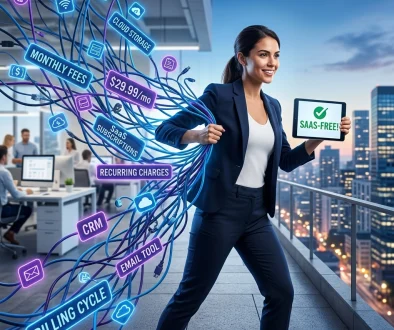
Operational costs for modern enterprises are increasingly dictated by Software-as-a-Service (SaaS) subscriptions. As of 2026, the average mid-sized company utilizes over 100 discrete SaaS applications. This results in significant monthly recurring revenue (MRR) leakage. Data silos, vendor lock-in, and unpredictable pricing adjustments are the primary risks associated with this model.
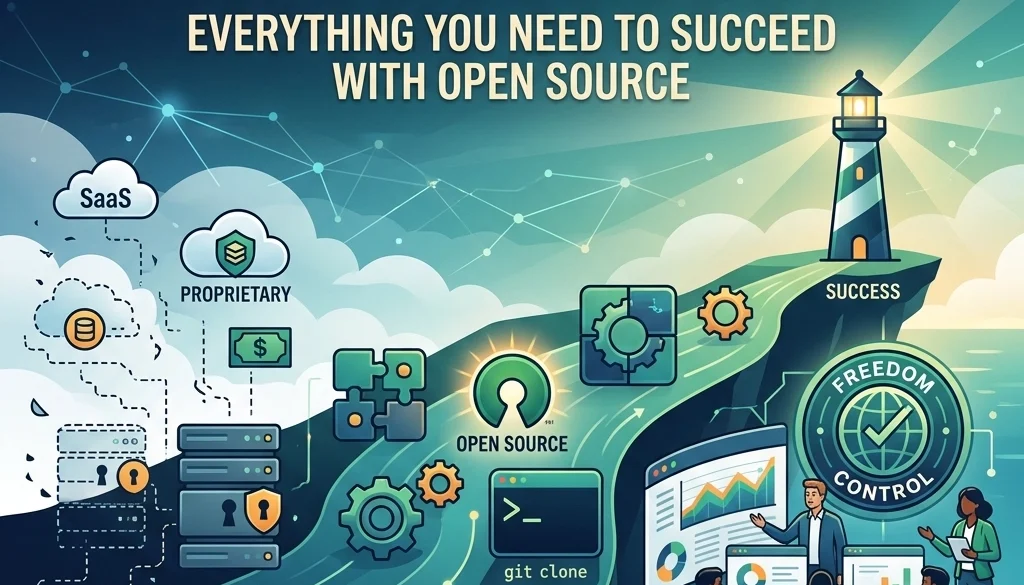
The SaaS-free business model represents a shift toward digital sovereignty. This transition involves replacing proprietary hosted services with self-hosted, open-source alternatives. The primary objectives are cost reduction, data control, and infrastructure permanence.
Structural Analysis: Cost Comparison
The financial discrepancy between SaaS and self-hosted infrastructure is quantifiable.
SaaS Expenditure (Typical Monthly Allocation)
- CRM: $150/user
- Project Management: $25/user
- Marketing Automation: $300 – $1,000/month
- Analytics: $150/month
- Communication: $15/user
Self-Hosted Expenditure (Fixed Monthly Allocation)
- High-Performance VPS: $40 – $120/month
- Storage/Backups: $10 – $50/month
- Maintenance: $0 (Internal) or Fixed Service Fee
The elimination of per-user licensing fees allows for linear scaling without exponential cost increases. Calculating the specific return on investment is facilitated by the AI Automation ROI Calculator.

Infrastructure Foundation: VPS Setup and Management
A Virtual Private Server (VPS) serves as the host for all self-hosted applications. Success requires rigorous selection and configuration protocols.
Hardware Selection
Resource requirements vary based on the application stack. Minimal specifications for a centralized business hub:
- CPU: 4-8 Cores (Dedicated)
- RAM: 16GB – 32GB
- Storage: NVMe SSD (Scalable)
- Network: 1Gbps+ Uplink
Recommended providers include DigitalOcean, Hetzner, AWS, and Linode. Geographic location must align with data residency requirements and latency targets.
Security Hardening Protocol
A standardized VPS setup and management process includes:
- OS Installation: Deployment of Ubuntu 24.04 LTS or Debian 12.
- SSH Configuration: Disabling root login. Implementation of SSH keys. Change of default port (22) to a non-standard port.
- Firewall Deployment: Configuration of UFW (Uncomplicated Firewall) to permit only essential traffic (80, 443, and custom SSH).
- Automated Updates: Configuration of
unattended-upgradesfor security patches. - Fail2Ban: Installation of intrusion prevention software to mitigate brute-force attempts.
Core Software Components: Open Source SaaS Alternatives
The following sections identify primary SaaS categories and their enterprise-grade open-source replacements.
Customer Relationship Management (CRM)
Proprietary tools such as Salesforce or HubSpot are replaced by:
- SuiteCRM: A comprehensive platform for sales force automation and customer service.
- ERPNext: An integrated system covering CRM, inventory, and accounting.
Marketing and Communication
- Mautic: Replaces Mailchimp and HubSpot Marketing. It enables automated email sequences, lead scoring, and web tracking.
- Mattermost / Rocket.Chat: Replaces Slack and Microsoft Teams. These platforms offer end-to-end encryption and full data ownership.
- Plunk / Listmonk: Lightweight alternatives for transactional and bulk email delivery.
Business Operations and Productivity
- Nextcloud: A comprehensive replacement for Google Workspace and Dropbox. It provides file storage, calendar synchronization, and document editing.
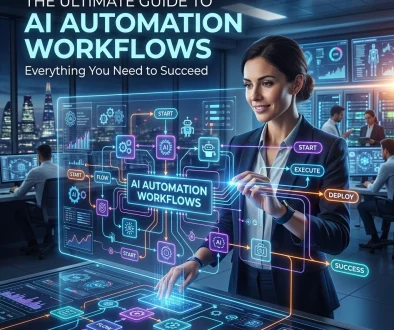
- n8n: An open-source workflow automation tool. It serves as a self-hosted alternative to Zapier, facilitating complex integrations across the software stack. More information is available at Marketrun Solutions: AI Automations.

Advanced Implementation: Self-Hosting LLMs
Artificial Intelligence is a significant component of modern SaaS expenditure. Relying on external APIs (OpenAI, Anthropic) introduces data privacy concerns and variable costs.
The transition to self-hosted Large Language Models (LLMs) is achievable using frameworks such as LocalAI or Ollama. These tools allow businesses to run models like Llama 3 or Mistral on private hardware. This ensures that sensitive corporate data never leaves the local network.
Detailed guidance on this transition is available in the Self-Hosting LLMs 2026 Guide and the specialized Self-Hosting LLMs service page.
Technical Deployment Protocol: Containerization
Efficient management of multiple open-source tools on a single VPS requires containerization.
Docker and Docker Compose
Docker isolates applications and their dependencies. Docker Compose enables the definition and execution of multi-container applications using YAML files. This ensures environment consistency across development and production stages.
Reverse Proxy Management
Nginx Proxy Manager or Traefik is utilized to route incoming traffic to the correct containers. These tools also automate the acquisition and renewal of SSL certificates via Let's Encrypt, ensuring all services are accessible via HTTPS.
Dashboard Orchestration
Tools such as Portainer or Coolify provide a graphical interface for managing containers, monitoring resource usage, and viewing logs. This reduces the requirement for constant CLI intervention.

Data Persistence and Redundancy
A SaaS-free model necessitates a robust data backup strategy. The responsibility for data integrity shifts from the provider to the business.
Backup Strategy (3-2-1 Rule)
- 3 Copies of Data: One primary, two backups.
- 2 Different Media: e.g., Local NVMe and Cloud Object Storage.
- 1 Off-site Location: Utilization of S3-compatible storage (e.g., Backblaze B2 or Wasabi) for disaster recovery.
Automated backup tools like Restic or BorgBackup provide encrypted, deduplicated backups to remote targets.
Strategic Support: Marketrun Deployments
Transitioning to a SaaS-free model requires technical expertise in Linux administration, network security, and software architecture. Marketrun provides specialized services to facilitate this transition.
Services include:
- Custom Software Development: Tailoring open-source tools to specific business requirements. Mobile and Web Apps.
- Open Source Deployment: Turnkey setup of VPS infrastructure and application stacks. Deployment Services.
- Maintenance and Support: Ongoing monitoring and security patching.

Operational Status: Maintenance and Scaling
Post-deployment, the SaaS-free business requires periodic maintenance.
Monitoring
Uptime Kuma or Grafana/Prometheus stacks are deployed to monitor service availability and server health. Alerts are configured to notify administrators via Mattermost or email if resource thresholds are exceeded.
Scaling Logic
As user demand increases, the infrastructure is scaled vertically (increasing VPS resources) or horizontally (deploying a cluster of servers using Docker Swarm or Kubernetes).
Version Control
Software updates must be tested in a staging environment before production deployment. This prevents service interruptions caused by breaking changes in open-source updates.
Critical Considerations: The Trade-off
The SaaS-free model involves a trade-off between capital expenditure (CapEx) and operational complexity. While monthly costs are significantly lower, the requirement for technical oversight is higher.
Businesses with limited technical resources may opt for managed open-source hosting or partnership with a specialized provider like Marketrun. For enterprises prioritizing data privacy and long-term cost efficiency, the self-hosting model is the optimal configuration for 2026 and beyond.

Summary of Targeted Solutions
- Infrastructure: VPS Setup and Management
- AI Integration: Self-Hosted LLMs
- Customization: Custom Software Development
- ROI Analysis: Financial Impact Assessment
The transition to a SaaS-free model is a technical process aimed at achieving organizational autonomy and financial optimization. By leveraging open-source software and private VPS infrastructure, businesses eliminate the risks associated with third-party software dependencies.