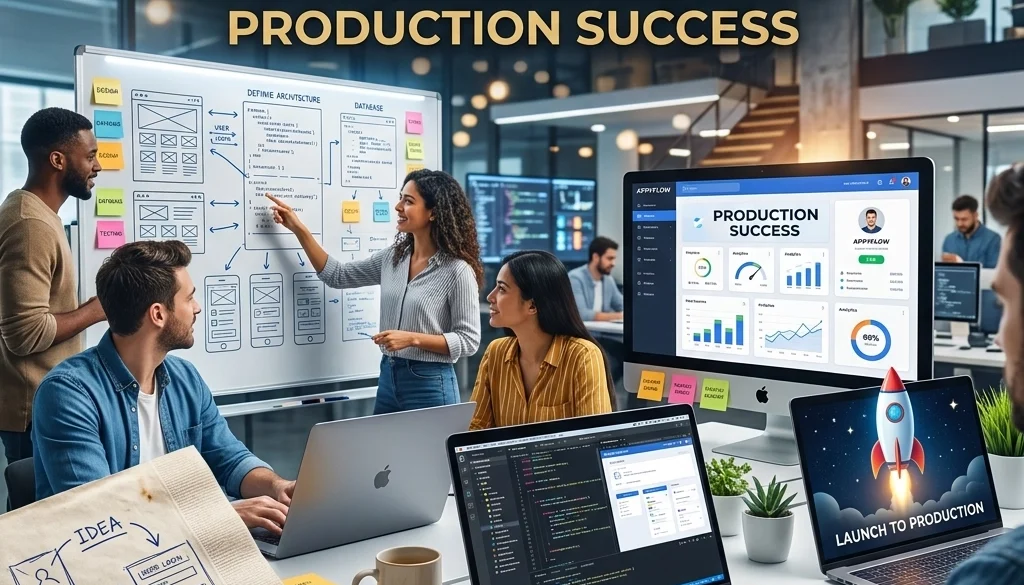
The Ultimate Guide to Application Development: From Napkin Sketch to Production Success
Definition of Application Development
Application development is the structured sequence of activities required to conceptualize, design, implement, and deploy a software product. This process encompasses both website development and mobile application creation. The objective is to transform an initial concept into a stable, scalable, and functional digital asset that meets specific business requirements.
For startups and established enterprises, the transition from a "napkin sketch" to a production-ready system involves multiple specialized phases. These phases ensure that technical debt is minimized, user needs are addressed, and the software architecture supports future growth. Marketrun specializes in this lifecycle through custom software development and AI-integrated solutions.
The Discovery Phase: Requirement Analysis and Strategy
The discovery phase is the primary stage of the development lifecycle. It focuses on the validation of the core idea and the identification of project constraints.
Problem Identification and Market Fit
Application development begins with the identification of a specific problem. A software product serves as a solution to an inefficiency or a market gap. Analysis during this phase includes:
- User Persona Definition: Identification of the target audience.
- Competitor Analysis: Review of existing solutions in the market.
- Value Proposition: Definition of why this specific application is necessary.
Stakeholder Alignment
Alignment ensures that business objectives and technical possibilities are synchronized. Documentation produced during this phase includes Business Requirement Documents (BRD) and Functional Requirement Specifications (FRS). These documents act as the source of truth for the development team.

Planning and Technical Architecture
Planning defines the technical foundation of the project. Decisions made during this stage impact the long-term scalability and maintenance costs of the application.
Selection of Development Methodology
Two primary frameworks dominate the industry:
- Agile Methodology: Features iterative development cycles known as sprints. It allows for flexibility and continuous feedback. It is the standard for modern startups.
- Waterfall Methodology: A linear approach where each phase must be completed before the next begins. It is utilized for projects with fixed, unchanging requirements.
System Architecture and Tech Stack
Architecture is the structural design of the software. It involves selecting the "stack": the combination of programming languages, frameworks, and database systems.
- Front-end: React, Vue, or Angular for web; Swift, Kotlin, or Flutter for mobile.
- Back-end: Node.js, Python, or Go.
- Database: PostgreSQL, MongoDB, or specialized vector databases for AI development.

UX/UI Design: The User Experience Blueprint
Design is not merely aesthetic; it is functional. UX (User Experience) focuses on the logic and flow of the application, while UI (User Interface) focuses on the visual presentation.
Wireframing and Prototyping
Wireframes are low-fidelity blueprints that map out the user journey. High-fidelity prototypes are interactive simulations of the final product. These tools allow for user testing and feedback before the implementation of any code.
Visual Identity
This involves the application of brand guidelines, including color palettes, typography, and iconography. Consistency across platforms is critical for mobile and web apps.
Implementation: The Development Cycle
Development is the conversion of designs and requirements into machine-readable code. This phase is typically the most resource-intensive portion of the lifecycle.
Component-Based Development
Modern application development utilizes component-based architecture. Features are built as independent, reusable modules. This approach facilitates:
- Parallel Development: Multiple developers work on different components simultaneously.
- Easier Testing: Individual components are verified in isolation.
- Scalability: New features are added without disrupting existing logic.
Environment Management
To maintain code integrity, development is conducted across three distinct environments:
- Development (Dev): The local environment where code is written and initial debugging occurs.
- Staging: A replica of the production environment used for final testing and stakeholder approval.
- Production: The live environment accessible to end-users.
Marketrun provides expertise in offshore web and mobile development, ensuring that these environments are managed according to global industry standards.

Quality Assurance and Testing Protocols
Testing is a continuous process that ensures the application is free of critical defects and security vulnerabilities.
Types of Testing
- Unit Testing: Verification of individual functions or components.
- Integration Testing: Verification that different modules work together correctly.
- User Acceptance Testing (UAT): Verification by the client or end-users that the application meets the business requirements.
- Performance Testing: Stress testing the application under high load to ensure stability.
- Security Testing: Identification of vulnerabilities to prevent data breaches.
Deployment and Production Launch
Deployment is the process of moving the application from the staging environment to the production server.
Continuous Integration and Continuous Deployment (CI/CD)
CI/CD pipelines automate the testing and deployment process. When code is updated, the pipeline automatically runs tests and deploys the update if all checks pass. This reduces human error and ensures a faster time-to-market.
App Store Submission
For mobile applications, the deployment process includes submission to the Apple App Store and Google Play Store. These platforms have specific guidelines regarding privacy, security, and performance that must be met for approval.
Maintenance and Continuous Improvement
Post-launch, the application enters the maintenance phase. Software is never "finished"; it requires ongoing updates to remain functional and secure.
Monitoring and Error Tracking
Tools are used to monitor server uptime and track application crashes in real-time. This allows technical teams to respond to issues before they affect a large portion of the user base.
Feature Evolution and AI Integration
As user needs change, new features are developed and deployed. In the current technological landscape, many applications are evolving to include AI agents and automations. This includes the integration of Large Language Models (LLMs) and automated workflows to increase operational efficiency.

Cost Considerations in Application Development
The budget for application development varies based on complexity, platform (web vs. mobile), and the geographic location of the development team.
- Custom Software vs. Off-the-shelf: Custom solutions offer higher initial costs but greater long-term ROI through specific feature alignment.
- Onshore vs. Offshore: Companies often compare costs between regions. Research on custom software costs in India vs USA indicates significant differences in hourly rates and total project expenditures.
Marketrun offers transparent pricing models to assist startups and enterprises in planning their development budgets.
The Role of Open Source and AI
Efficiency in modern development is often achieved through the use of open-source frameworks and AI-driven tools.
Open Source Deployment
Utilizing existing open-source libraries allows teams to focus on the unique business logic of the application rather than "reinventing the wheel." Marketrun assists in open source deployment to optimize development speed.
Self-Hosting and Privacy
For businesses with strict data privacy requirements, self-hosting LLMs and applications is a viable strategy. This ensures that proprietary data remains within the company's infrastructure while still leveraging advanced AI capabilities.
Summary of the Development Lifecycle
- Discovery: Defining the "Why" and "Who."
- Planning: Defining the "How" and "What."
- Design: Creating the visual and functional blueprint.
- Development: Writing the code and building components.
- Testing: Ensuring quality and security.
- Deployment: Releasing the product to the public.
- Maintenance: Monitoring, updating, and scaling.
Successful application development requires a disciplined approach to each phase. By following a structured journey from napkin sketch to production, businesses can mitigate risks and deliver high-quality digital products.
For specialized assistance in website development and custom software solutions, contact the technical team at Marketrun.