The Ultimate Guide to AI-Driven Engineering: Everything You Need to Succeed in 2026 and Beyond
AI-Driven Engineering Overview
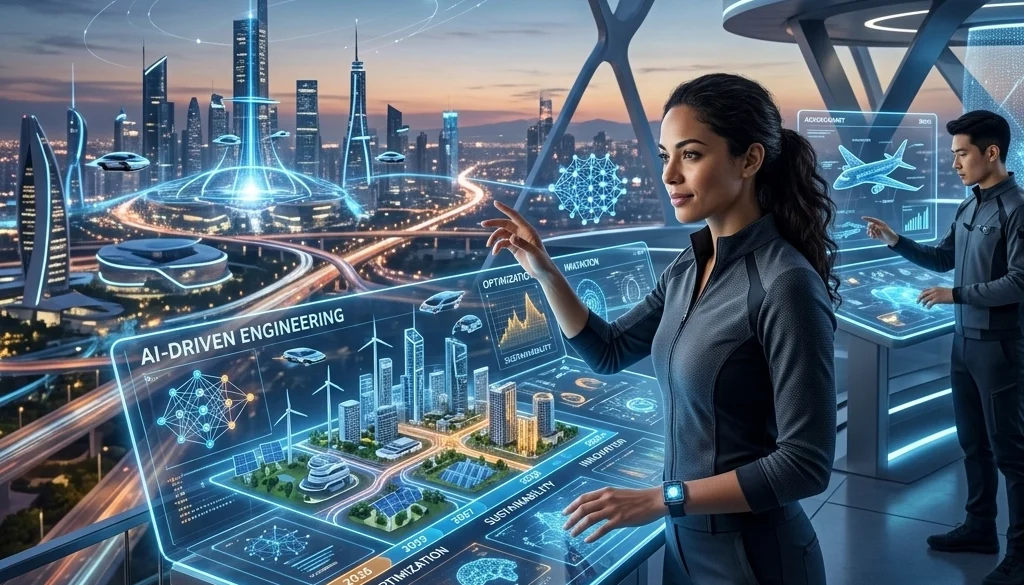
AI-driven engineering in 2026 is defined by the integration of artificial intelligence into the technical lifecycle. Systems are utilized to augment human output in software development, mechanical design, and operational management. The shift emphasizes collaboration between engineering logic and machine learning models.
Engineers focus on high-level system architecture while AI agents handle repetitive, data-intensive tasks. The primary objective is the reduction of iteration cycles and the improvement of system reliability.
Core Technological Frameworks
Generative AI and Transformer Models
Large Language Models (LLMs) and transformer architectures facilitate code generation, documentation, and logic verification. In 2026, these models are integrated directly into Integrated Development Environments (IDEs) to provide real-time suggestions and error correction.
Retrieval-Augmented Generation (RAG)
RAG systems connect general LLMs to domain-specific datasets. This architecture ensures that AI outputs are grounded in proprietary business data, reducing hallucinations. For organizations using custom AI solutions for SMBs, RAG is the standard for maintaining data accuracy in technical documentation and support systems.
Fine-Tuning and Model Adaptation
Standard models require fine-tuning for specific engineering domains. Fine-tuning involves adjusting model weights using niche datasets, such as specific coding libraries or mechanical stress test data. This process optimizes the AI for specialized tasks.

Software Engineering Lifecycle Evolution
Automated Code Review and Security
AI systems perform static and dynamic analysis to identify vulnerabilities. In 2026, security is prioritized through automated scanning of dependencies and logic flows. This reduces the risk of deployment-stage failures.
Performance Optimization
Algorithms analyze runtime data to suggest performance improvements. This includes memory management, query optimization, and load balancing. The utilization of AI automations allows for continuous monitoring and proactive adjustment of software resources.
Deployment and Infrastructure
Cloud-native development is increasingly managed by AI agents. These agents handle container orchestration, scaling, and resource allocation. Marketrun specializes in open source deployment to provide businesses with control over their infrastructure and data.

AI Agents for Business Operations
Definition of AI Agents
AI agents are autonomous systems capable of executing multi-step tasks to achieve specific goals. Unlike basic chatbots, agents interact with external tools, APIs, and databases.
Business Use Cases
- Customer Support: Automated resolution of technical queries.
- Supply Chain Management: Predictive modeling for inventory and logistics.
- Internal Knowledge Management: Searchable databases utilizing RAG for employee queries.
Implementing ai agents for business results in measurable reductions in operational overhead. These systems operate continuously without human intervention for standard procedural tasks.
Custom AI Solutions for SMBs
Accessibility and Cost Efficiency
Small and Medium-sized Businesses (SMBs) utilize custom AI solutions to compete with larger enterprises. Cost-effective deployment strategies include the use of small language models (SLMs) and self-hosting LLMs.
Implementation Strategies
- Needs Assessment: Identification of manual processes suitable for automation.
- Data Integration: Consolidating business data for AI training or RAG.
- Pilot Deployment: Testing AI solutions in controlled environments.
- Scaling: Full-scale integration across departments.
Marketrun provides custom software solutions tailored to the specific budgetary and operational constraints of SMBs.
Mechanical and Product Engineering Integration
Generative Design
AI optimizes geometry in CAD platforms. Tools such as SolidWorks AURA and Creo GDX generate design alternatives based on weight, material, and stress parameters. This reduces design time by approximately 50-60%.
Simulation and FEA
Finite Element Analysis (FEA) and Computational Fluid Dynamics (CFD) are accelerated by AI. Machine learning models predict simulation results based on previous data points, allowing for rapid iteration before final validation.

Technical Competencies for 2026
Programming and Data Handling
- Python: The primary language for AI integration.
- Pandas/NumPy: Required for data manipulation and preprocessing.
- Git/GitHub: Standard for version control and collaborative AI development.
Machine Learning Operations (MLOps)
Engineers must understand the deployment, monitoring, and maintenance of machine learning models. MLOps ensures that models remain accurate and performant after deployment.
Prompt Engineering
The ability to construct precise instructions for AI models is a core requirement. Effective prompt engineering determines the quality and safety of AI-generated content and code.
Marketrun Vision for the Next Decade
The next decade of software development will be characterized by full-stack AI integration. Marketrun focuses on building systems that are modular, secure, and privacy-focused.
Decentralization and Self-Hosting
Data privacy concerns drive the shift toward self-hosted solutions. By self-hosting LLMs, businesses retain absolute control over their proprietary information and avoid third-party data processing risks.
Cross-Platform Development
AI-driven engineering facilitates the rapid creation of mobile and web applications. Marketrun utilizes AI to bridge the gap between initial concept and cross-platform deployment, ensuring consistency across iOS, Android, and web environments.

ROI and Economic Impact
Efficiency Gains
Engineering teams report significant productivity increases when utilizing AI tools. Reductions in manual coding, testing, and debugging allow for faster time-to-market.
Cost Analysis
While initial implementation requires investment, long-term operational costs are reduced through automation. SMBs can calculate potential savings using an AI automation ROI calculator.
Data Security and Ethics
Privacy Protocols
AI systems must adhere to strict data protection regulations. Encryption and anonymization of data used for training are mandatory. Marketrun incorporates security at the architectural level in all custom AI solutions.
Bias Mitigation
Ongoing monitoring is required to detect and correct biases in AI models. Engineering teams must implement audit logs and validation sets to ensure objective output.
Summary of Implementation Steps
To successfully transition to AI-driven engineering, organizations should follow this structured approach:
- Infrastructure Audit: Evaluate current server and data capabilities.
- Tool Selection: Identify relevant AI frameworks and software solutions.
- Staff Training: Upskill the engineering workforce in AI collaboration and MLOps.
- Data Structuring: Ensure internal data is accessible and formatted for RAG or fine-tuning.
- Continuous Evaluation: Monitor system performance and update models regularly.
AI-driven engineering is the standard operational model for the year 2026. Success is dependent on the technical integration of AI agents and the strategic deployment of custom software. Organizations that adopt these technologies prioritize efficiency, scalability, and technical precision. For further information on implementation, consult the Marketrun solutions guide.