Why the SaaS-Free Business Model Will Change the Way You Scale in 2026
Current Subscription State: Analysis of Overhead
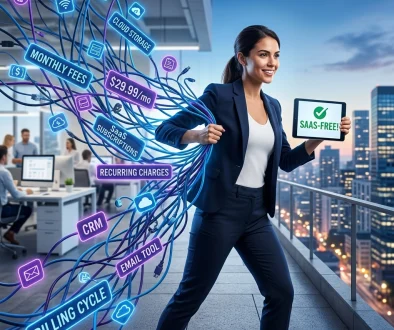
The fiscal year 2026 indicates a saturation in Software-as-a-Service (SaaS) consumption. Organizations maintain an average of 15 to 40 active subscriptions. Recurring costs represent a significant percentage of operational expenditure. Revenue leakage occurs through unused seats, unmonitored tier upgrades, and price increases by centralized providers.
Scaling a business traditionally requires a linear increase in subscription costs. This correlation limits profit margins as the user base expands. The SaaS-free business model utilizes self-hosted infrastructure to decouple growth from recurring software fees. Transitioning to self-hosted environments allows for fixed-cost scaling.
Strategic Shift: The Transition to Open Source SaaS Alternatives
The availability of enterprise-grade open source software enables the replacement of proprietary tools. Functional parity is achieved through specific alternatives:
Customer Relationship Management (CRM)
- Proprietary: Salesforce, HubSpot.
- Alternative: SuiteCRM, Odoo (Community Edition), or ERPNext.
- Benefit: Elimination of per-user license fees. Data resides on local or private cloud servers.
Team Communication and Collaboration
- Proprietary: Slack, Microsoft Teams.
- Alternative: Mattermost, Rocket.Chat, or Zulip.
- Benefit: Full control over message history and data encryption. Custom software integration is facilitated via open APIs.
Workflow Automation
- Proprietary: Zapier, Make.com.
- Alternative: n8n (Self-hosted), Activepieces.
- Benefit: Execution of unlimited workflows without task-based billing. Organizations can utilize AI automations within a controlled environment.
Analytics and Data Tracking
- Proprietary: Google Analytics 360, Mixpanel.
- Alternative: Matomo, Plausible, or Umami.
- Benefit: Compliance with privacy regulations (GDPR/CCPA) is managed through first-party data collection.

Infrastructure Requirements: VPS Setup and Management
Self-hosting requires a Virtual Private Server (VPS) or dedicated hardware. In 2026, VPS providers offer high-density compute resources at low cost.
Provider Selection
- Global Providers: DigitalOcean, Hetzner, AWS, Google Cloud.
- Selection Criteria: Latency, uptime Service Level Agreements (SLAs), and bandwidth allocations.
Server Orchestration
The use of containerization tools such as Docker and Kubernetes is standard for VPS management.
- Containerization: Applications are packaged into isolated units. This ensures consistency across development and production environments.
- Management Panels: Tools like Portainer, Coolify, or Dokku provide a graphical interface for managing containers, reducing the need for manual CLI intervention.
- Open Source Deployment: Marketrun provides open source deployment services to automate these configurations.

Economic Analysis: Subscription vs. Self-Hosting
Financial projections for 2026 indicate that the break-even point for self-hosting occurs within 6 to 12 months of transition.
| Category | SaaS Annual Cost (Est. 50 Users) | Self-Hosted Annual Cost (VPS + Support) |
|---|---|---|
| CRM | $15,000 | $1,200 |
| Communication | $6,000 | $600 |
| Automation | $4,800 | $300 |
| Support/Helpdesk | $3,600 | $400 |
| Total | $29,400 | $2,500 |
The reduction in overhead is approximately 91%. These funds are redirected toward product development or market expansion. Calculating the AI automation ROI provides further clarity on the financial impact of shifting from external APIs to internal systems.
Data Sovereignty and Security Protocols
Proprietary SaaS models require data to be stored on third-party servers. This introduces risks regarding data breaches and unauthorized access.
Security Layer Implementation
- Firewall Management: Configuration of UFW (Uncomplicated Firewall) or hardware firewalls.
- SSL/TLS Encryption: Automated certificate renewal via Let's Encrypt and Certbot.
- Identity Access Management (IAM): Integration of Authentik or Keycloak for centralized authentication.
- Backup Redundancy: Automated snapshots and off-site storage to S3-compatible buckets.
Self-hosting ensures that the organization maintains 100% ownership of intellectual property and customer data. This is critical for entities utilizing self-hosting LLMs where proprietary data is processed.

Implementation Protocol: A Multi-Phase Strategy
The transition to a SaaS-free model follows a structured deployment sequence.
Phase 1: Audit and Identification
List all active subscriptions. Categorize by criticality and ease of migration. Identify corresponding open source saas alternatives for each tool.
Phase 2: Infrastructure Provisioning
Setup of VPS instances. Configuration of security groups and SSH keys. Implementation of a management dashboard for container monitoring.
Phase 3: Pilot Deployment
Deploy non-critical tools first (e.g., internal analytics or project management). Validate performance and data integrity. Use the self-hosting LLMs 2026 guide for deploying local AI models to replace external API dependencies.
Phase 4: Full Migration
Transfer data from SaaS providers using API exports or database migrations. Conduct user training for new interfaces. Terminate existing subscriptions.

Scaling Dynamics in 2026
Scaling under the SaaS-free model is vertical and horizontal.
Vertical Scaling
Increasing VPS resources (CPU, RAM, Storage) to accommodate more data or higher traffic. This is a manual or automated process depending on the provider.
Horizontal Scaling
Adding more server nodes to distribute the load. Load balancers (Nginx, Traefik) manage incoming traffic. This allows for near-infinite growth without incurring the per-user tax common in the SaaS industry.
AI Integration
In 2026, AI agents perform routine maintenance and monitoring tasks. These agents are deployed on internal servers to manage VPS setup and management, identify security anomalies, and optimize resource allocation. Information on these systems is available in the AI agents and automations guide.
Technical Maintenance Requirements
Maintenance is the primary requirement of a self-hosted ecosystem.
- Updates: Regular patching of the Operating System (OS) and application containers.
- Monitoring: Uptime monitors (Uptime Kuma) and resource alerts.
- Support: Internal technical teams or external partners manage the infrastructure.
Marketrun offers solutions for businesses seeking to outsource the technical management of their self-hosted stack while retaining ownership and cost benefits.
Operational Conclusion of the Model
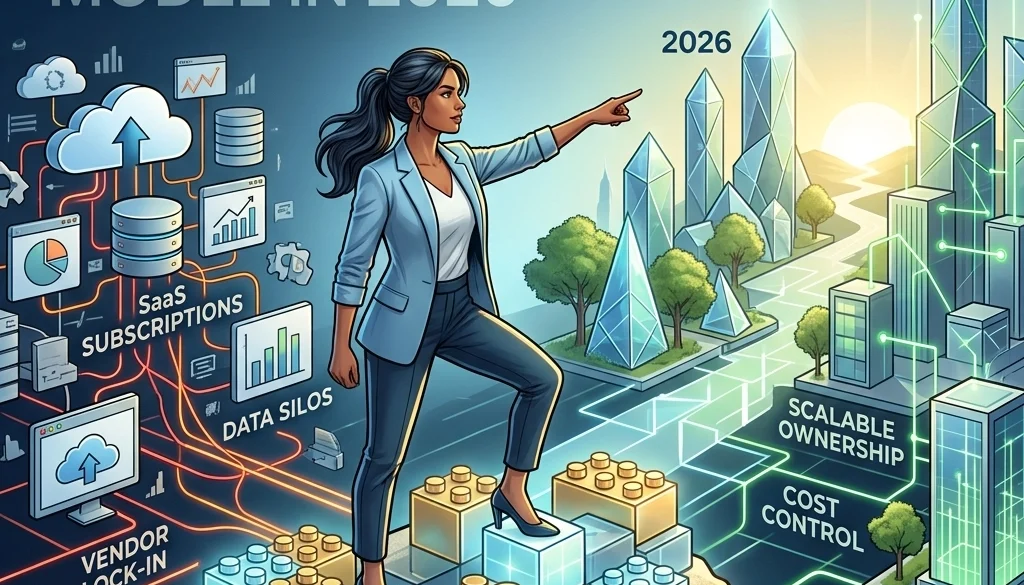
The SaaS-free business model is a shift from renting infrastructure to owning it. It addresses the volatility of subscription pricing and the risks of vendor lock-in. For organizations scaling in 2026, the technical capability to manage a private stack is a competitive requirement.
Transitioning from "Rent" to "Own" stabilizes the balance sheet and provides the architectural flexibility required for advanced AI and custom software applications. Organizations interested in beginning this transition can review pricing for deployment services or explore the blog for further technical documentation.