Why the SaaS-Free Business Model Will Change the Way You Scale Your Operations
Definition of the SaaS-Free Business Model
The SaaS-free business model is an operational strategy where a company replaces third-party software-as-a-service subscriptions with self-hosted, open-source alternatives. This model prioritizes ownership of the software stack and data. Implementation involves deploying applications on private virtual servers (VPS) or dedicated hardware.
Operational scaling under this model is decoupled from per-user licensing fees. Growth is facilitated by increasing server capacity rather than increasing monthly subscription payments to multiple vendors.
Economic Impact of Subscription Proliferation
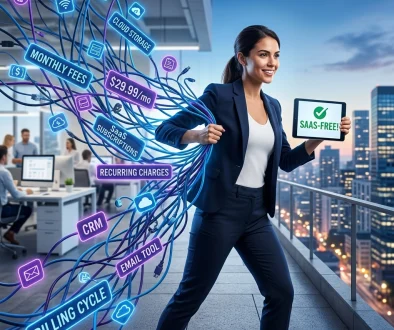
Traditional SaaS models utilize per-seat or per-feature pricing. As personnel count increases, software expenditure rises linearly or exponentially.
Cost Accumulation Factors:
- User Seat Fees: Fixed costs per employee for CRM, project management, and communication tools.
- Data Volume Charges: Increased costs for storage and bandwidth usage in cloud-native applications.
- Feature Gating: Requirements for enterprise-level tiers to access security or integration features.
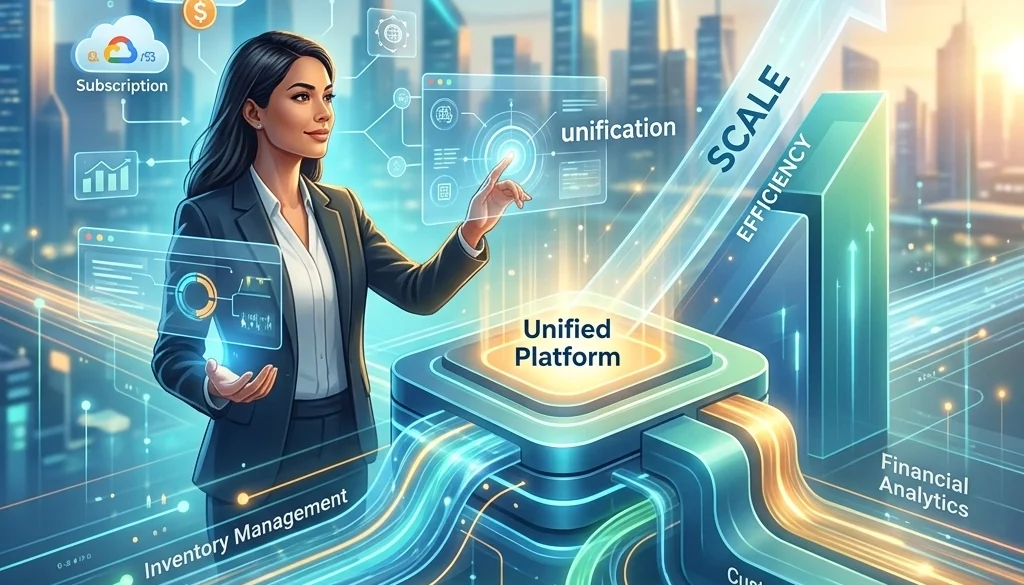
A SaaS-free approach shifts these expenditures from operational expenses (OpEx) to a more controlled infrastructure budget. Monthly savings are achieved by consolidating multiple services onto unified VPS clusters.
Open Source SaaS Alternatives
Marketrun facilitates the transition from proprietary tools to open source deployment. Several categories of enterprise software have mature open-source counterparts.
Customer Relationship Management (CRM)
Proprietary systems like Salesforce or HubSpot incur high monthly costs. Self-hosted alternatives provide equivalent functionality without recurring license fees.
- SuiteCRM: Provides lead management, workflow automation, and reporting.
- EspoCRM: Offers a responsive interface for sales automation and marketing.
Project Management and Collaboration
Coordination of tasks and documentation is manageable through internal servers.
- OpenProject: Supports Agile, Kanban, and Gantt chart methodologies.
- Focalboard: Serves as a self-hosted alternative to Trello and Notion.
Internal Communication
Centralizing communication data ensures privacy and reduces costs.
- Mattermost: A secure platform for team messaging.
- Rocket.Chat: Facilitates omnichannel communication and internal chat.

VPS Setup and Management
The infrastructure foundation of a SaaS-free model is the Virtual Private Server (VPS). Efficient VPS setup and management are required to ensure uptime and security.
Server Selection Criteria
- Resource Allocation: CPU core count, RAM, and NVMe storage must match the requirements of the hosted applications.
- Geographic Location: Server placement impacts latency. For organizations with specific regional requirements, options like for US clients or for India clients dictate data center selection.
- Network Throughput: Bandwidth limits must accommodate peak traffic periods.
Management Methodologies
- Containerization: Using Docker to isolate applications ensures consistency across environments.
- Orchestration: Tools like Kubernetes or Docker Swarm manage the lifecycle of containers.
- Monitoring: Prometheus and Grafana track server health and performance metrics.
Technical Architecture for Scalability
Scaling in a SaaS-free environment involves horizontal and vertical scaling of the VPS environment.
Vertical Scaling
Vertical scaling increases the resources (RAM, CPU) of an existing server. This is the primary method for handling increased load on a single application.
Horizontal Scaling
Horizontal scaling involves adding more server instances to a cluster. Load balancers distribute traffic across multiple nodes, ensuring high availability. This method is utilized when the user base grows beyond the capacity of a single machine.

Integration of AI and Automation
Self-hosting extends to artificial intelligence. Proprietary AI APIs often present high costs and data privacy concerns.
Self-Hosting Large Language Models (LLMs)
Enterprises can host LLMs on private infrastructure. This ensures that sensitive data does not leave the internal network. Detailed information is available in the self-hosting LLMs guide.
AI Automations
Custom AI agents can be deployed to handle repetitive tasks. These agents interact with self-hosted CRMs and databases. Marketrun provides AI automations that function within a SaaS-free architecture.
Security and Data Sovereignty
The SaaS-free model provides direct control over security protocols and data residency.
Security Advantages:
- Firewall Control: Granular rules for incoming and outgoing traffic.
- Encryption: Ownership of encryption keys for data at rest and in transit.
- Access Control: Integration with internal LDAP or Active Directory systems.
Compliance:
Self-hosting assists in meeting regulatory requirements such as GDPR or HIPAA by ensuring data remains within specific jurisdictions. Data is not shared with third-party SaaS vendors, reducing the surface area for potential breaches.
Custom Software Development vs. SaaS
Off-the-shelf SaaS products often require businesses to alter workflows to fit the software. Custom software allows the software to be built around the workflow.
Advantages of Custom Development:
- Functional Specificity: Features are built to exact requirements.
- Integration: Native compatibility with existing self-hosted tools.
- Long-term Cost: Elimination of subscription fees results in a lower total cost of ownership (TCO) over the software lifecycle.
Comparative analysis of development costs can be found in the guide on custom software India vs USA cost.

Implementation Roadmap
Transitioning to a SaaS-free model requires a phased approach.
1. Audit and Inventory
Identify all current SaaS subscriptions. Document the number of users, monthly cost, and critical features used in each application.
2. Alternative Selection
Match each SaaS tool with an open-source alternative. Evaluate the community support, update frequency, and ease of migration for each candidate.
3. Pilot Deployment
Deploy a selected application on a VPS. Test performance and user acceptance with a small group of employees.
4. Data Migration
Extract data from the SaaS provider via API or export tools. Clean and transform the data for import into the self-hosted system.
5. Production Rollout
Scale the VPS resources for the full user base. Implement backup and disaster recovery protocols.
Challenges and Mitigation
Technical Expertise
Managing a self-hosted stack requires server administration skills. Companies can utilize offshore web and mobile apps teams to provide the necessary technical management.
Maintenance Responsibility
Updates and security patches must be managed internally. Automation scripts and CI/CD pipelines reduce the manual effort required for these tasks.
Initial Capital Expenditure
While monthly costs are lower, there is an initial investment in setup and configuration. This is often offset within the first 6 to 12 months of operation. An AI automation ROI calculator can assist in determining the break-even point for these investments.
The Role of Marketrun in SaaS-Free Transitions
Marketrun provides the technical framework for companies seeking to eliminate SaaS dependencies. Services include:
- Deployment: Initial VPS setup and application installation.
- Development: Building mobile and web apps to replace specialized SaaS tools.
- Optimization: Fine-tuning server performance for AI development.
The transition to a SaaS-free model is a structural change in how business operations are scaled. By focusing on ownership and open source saas alternatives, organizations secure their data and stabilize their long-term operational costs.

For further technical resources, visit the Marketrun blog or view our solutions. Information regarding pricing for custom deployment services is available on the main site.