Why Everyone Is Talking About The SaaS-Free Business Model (And You Should Too)
Status Of SaaS Expenditure In 2026
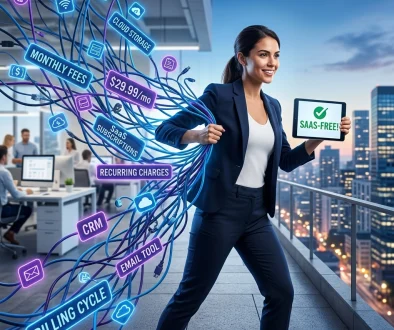
Subscription-based software models represent a significant portion of modern business overhead. Data indicates that average enterprise organizations utilize over 300 SaaS applications. This results in recurring monthly liabilities. The SaaS-free business model utilizes self-hosted infrastructure and open source alternatives to replace these recurring costs. This transition shifts software from an operating expense (OpEx) to a capital investment in infrastructure and internal capability.
Definition Of The SaaS-Free Business Model
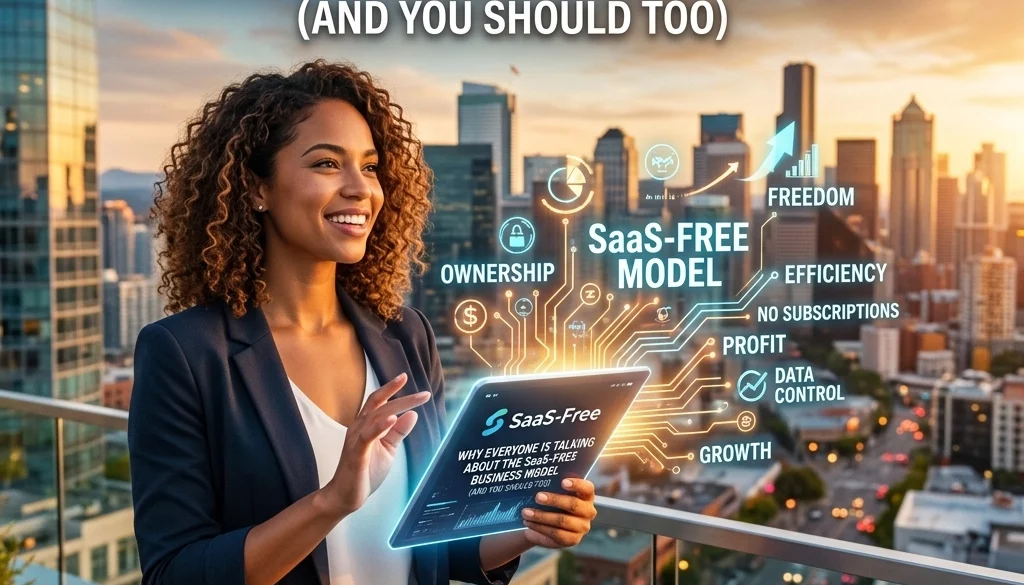
The SaaS-free business model involves the deployment of software on privately owned or leased servers. This model prioritizes data sovereignty, local control, and the elimination of per-user licensing fees. Implementation requires technical infrastructure, specifically Virtual Private Servers (VPS) and containerization technologies. Organizations utilizing this model maintain the same functional capabilities as SaaS users while removing external dependencies.

Open Source SaaS Alternatives For Business Functions
Functional parity exists between proprietary SaaS tools and open source alternatives. Organizations can replace major categories of software with self-hosted versions.
Customer Relationship Management (CRM)
Proprietary CRM platforms require monthly fees per user. Open source alternatives such as SuiteCRM or ERPNext provide lead management, sales funnels, and customer tracking without license constraints. These systems operate on internal databases.
Project Management And Collaboration
Tools like Slack and Asana have self-hosted equivalents. Mattermost and Rocket.Chat provide communication protocols. Planka and Focalboard offer task management and kanban boards. These tools integrate into existing server environments.
Analytics And Marketing
Standard web analytics platforms collect data for third-party use. Self-hosted alternatives like Plausible or Matomo ensure data remains on internal servers. Email marketing platforms like Mailchimp can be replaced by Listmonk or Mautic for automated campaign delivery.
Document Management And Productivity
Cloud suites for document editing involve ongoing costs. Nextcloud provides file storage, synchronization, and office suites. This infrastructure ensures that sensitive company documents are not stored on third-party cloud providers.
VPS Setup And Management Protocols
Transitioning to a SaaS-free model requires the acquisition and configuration of a Virtual Private Server (VPS). This process involves several technical phases.
Hardware Selection
VPS providers offer various tiers of CPU, RAM, and NVMe storage. Requirements depend on the number of concurrent users and the complexity of the applications. Standard configurations for small to medium enterprises often start with 8GB RAM and 4 vCPUs.
Operating System Installation
Linux distributions, specifically Ubuntu Server or Debian, serve as the base layer for most self-hosted software. These systems provide the necessary environment for containerized applications.
Containerization With Docker
Docker allows for the isolation of applications and their dependencies. This technology simplifies the deployment of open source saas alternatives. Each tool runs in a separate container, preventing conflicts between software libraries.

Reverse Proxy And SSL Configuration
Accessing self-hosted tools requires a reverse proxy, such as Nginx or Traefik. This component manages incoming traffic and directs it to the correct internal container. SSL certificates from providers like Let's Encrypt provide encrypted connections for security.
Quantitative Cost Analysis: SaaS vs. Self-Hosted
Financial indicators show a variance between these models over a 36-month period.
SaaS Model Costs
- CRM: $50/user/month
- Project Management: $15/user/month
- Email Marketing: $100/month
- Storage: $20/user/month
- Total for 10 users: $950/month ($34,200 over 36 months)
Self-Hosted Model Costs
- VPS Hosting: $40/month
- Initial Setup/Deployment: $5,000 (one-time)
- Maintenance: $100/month (automated or internal)
- Total: $140/month + $5,000 initial ($10,040 over 36 months)
The self-hosted model results in a reduction of total expenditure by approximately 70% in this scenario. Further cost reductions occur as the user count scales, as self-hosted tools do not charge per additional user seat.

Security And Maintenance Framework
Ownership of software necessitates responsibility for security and updates.
Data Backup Systems
Automated backup routines must be established. Tools such as Restic or BorgBackup transfer encrypted snapshots of application data to off-site storage or S3-compatible buckets. This mitigates the risk of data loss from hardware failure.
Security Hardening
VPS management involves securing the host environment. This includes:
- Disabling root login.
- Implementing SSH key-based authentication.
- Configuring firewalls (UFW or IPTables) to permit only necessary traffic.
- Regular application of security patches to the host OS and containers.
Monitoring And Uptime
Uptime monitoring tools like Uptime Kuma track the availability of self-hosted services. Alerts notify administrators of service interruptions. System resource monitoring prevents performance degradation by tracking CPU and memory utilization.
Transitioning With Marketrun
Marketrun provides the technical expertise required for this transition. Deployment services cover the setup of infrastructure and the migration of data from SaaS platforms to self-hosted environments.
Custom Software Development
Where open source alternatives do not meet specific requirements, custom software development creates tailored solutions. These applications are built for ownership rather than rental.
AI Automations And Integration
The SaaS-free model supports the integration of AI automations. Local LLMs and agents operate within the private network, ensuring that data processed by AI does not leave the internal environment. This is detailed in the self-hosting LLMs guide.

Scalability Indicators
The SaaS-free model scales by increasing the resources of the underlying VPS or by moving to a cluster of servers using technologies like Kubernetes. As organizational requirements grow, the infrastructure expands without the proportional increase in license fees associated with SaaS providers.
Technical Requirements For Scaling
- Vertical Scaling: Increasing RAM and CPU on the existing VPS instance.
- Horizontal Scaling: Deploying additional server nodes and utilizing a load balancer.
- Database Optimization: Implementing dedicated database instances for high-traffic applications.
Operational Impact And Data Sovereignty
The removal of SaaS dependencies increases operational resilience. Access to business tools is not subject to the service terms, pricing changes, or platform stability of external vendors. Data remains under the legal and physical control of the organization. This status is critical for compliance with international data protection regulations, particularly for US clients and India clients who have specific regulatory requirements.
Implementation Timeline
A standard transition to a SaaS-free model follows a structured timeline:
- Phase 1: Audit. Identification of all current SaaS subscriptions and usage levels.
- Phase 2: Selection. Identification of functional open source equivalents.
- Phase 3: Infrastructure Setup. Provisioning of VPS and network configuration.
- Phase 4: Migration. Transfer of data from SaaS platforms to self-hosted instances.
- Phase 5: Validation. Testing of workflows and security protocols.

Systemic Conclusion
The shift toward the SaaS-free business model is driven by financial optimization and a requirement for data autonomy. Utilizing VPS setup and management alongside open source software allows organizations to retain capital while maintaining operational capability. The model replaces variable monthly costs with a stable, owned infrastructure.
For detailed information on specific deployment strategies, refer to the Marketrun blog or explore AI and custom software solutions for modern business environments. Information regarding cost comparisons between regions is available in the custom software India vs USA guide.