Does Custom Software Really Matter in 2026? Why AI-Driven Engineering is the Only Way Forward
Status of Software Engineering: 2026 Baseline
The global software landscape in April 2026 is defined by the total integration of Large Language Models (LLMs) and autonomous agents into the development lifecycle. Traditional manual coding persists but results in increased technical debt and higher operational costs. Custom software development has transitioned from a discretionary expenditure to a core requirement for operational efficiency.
Generic SaaS platforms face saturation. These platforms offer standardized features that lack the specificity required for competitive differentiation. Marketrun identifies a shift toward ai-driven engineering as the primary method for maintaining market relevance.
The Obsolescence of Standardized SaaS
Standardized software creates operational bottlenecks. In 2026, business models are dynamic. Off-the-shelf tools provide rigid frameworks that require businesses to adapt their workflows to the software. AI-driven engineering reverses this dynamic. Software is now generated and modified to fit the specific needs of the business entity.
The limitations of 2024-era SaaS include:
- Inflexible data schemas.
- High per-seat licensing costs.
- Limited integration with proprietary AI workflows.
- Data silos that prevent the deployment of autonomous ai agents for business.

AI-Driven Engineering: Definition and Implementation
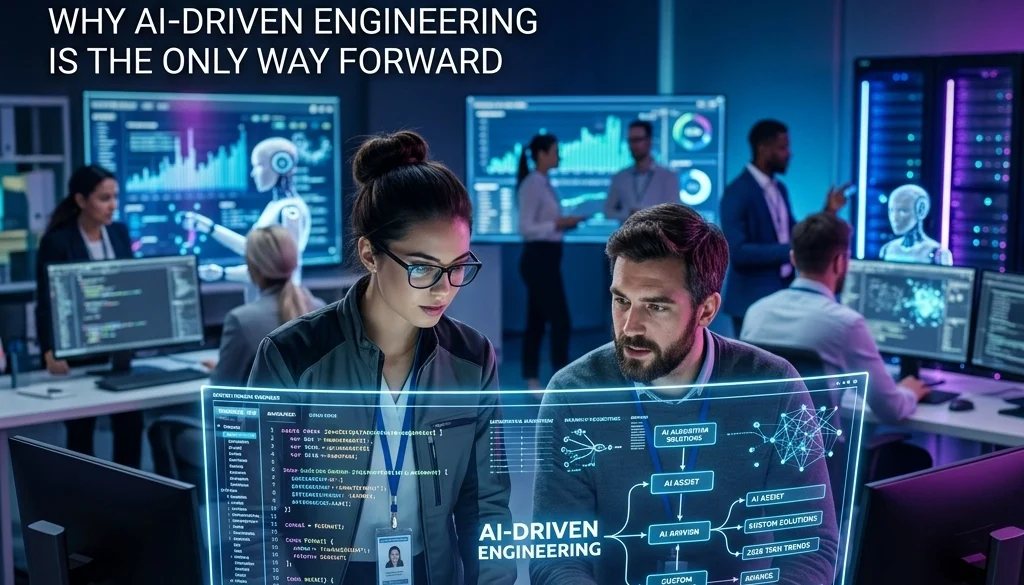
AI-driven engineering is the utilization of specialized AI models to architect, write, test, and deploy software systems. This process reduces development timelines by 60-80% compared to 2023 benchmarks. At Marketrun, this methodology is applied to create custom software that is inherently scalable.
Technical components of this approach include:
- Automated Code Synthesis: Functional requirements are converted into executable code via LLMs.
- Autonomous Debugging: AI agents identify and resolve regressions in real-time.
- Continuous Evolution: The software self-optimizes based on user interaction data.
The reliance on manual human intervention is minimized. Engineering teams focus on high-level architecture and strategic alignment.
AI Agents for Business: The Strategic Advantage
Autonomous agents are the primary interface for modern business software. These agents perform tasks across multiple domains including customer service, data analysis, and supply chain management.
For a business to deploy effective agents, the underlying software must be custom-built. Standardized APIs often lack the depth required for an agent to execute complex, multi-step reasoning. Custom software provides the necessary "hooks" and data access for ai-automations to function at peak efficiency.
Implementation of ai agents for business results in:
- 24/7 operational continuity.
- Elimination of human error in repetitive data entry.
- Real-time response to market fluctuations.
Custom AI Solutions for SMBs: Accessibility and Cost
Historically, custom software was restricted to large enterprises due to high capital requirements. In 2026, AI-driven engineering has reduced the cost of entry. Custom ai solutions for smbs are now economically viable.
Small and Medium Businesses (SMBs) utilize custom AI to automate niche processes that generic tools ignore. This allows smaller entities to compete with larger corporations by achieving similar or superior levels of automation and efficiency.
Marketrun provides pricing structures that reflect the increased speed of AI-assisted development. The democratization of high-end software is a direct result of these technological advancements.

Data Sovereignty and Self-Hosting
Data security is a critical metric in 2026. Third-party SaaS providers represent a centralized point of failure and a potential data leak risk. Custom software allows for self-hosting llms.
By hosting models locally or in private clouds, businesses maintain total control over their intellectual property. The self-hosting llms 2026 guide details the technical requirements for this transition.
Benefits of self-hosting in a custom environment include:
- Zero data leakage to public model trainers.
- Reduced latency for internal requests.
- Compliance with regional data protection regulations.
- Predictable infrastructure costs.
Technical Debt and Legacy System Replacement
Legacy systems from the 2010s and early 2020s are major sources of inefficiency. These systems lack the infrastructure to support modern AI agents. AI-driven engineering facilitates the rapid migration of legacy data into mobile and web apps.
The process involves:
- Legacy Extraction: AI models parse old codebases to understand business logic.
- Schema Mapping: Data is restructured for modern databases.
- Frontend Generation: New interfaces are created using ai-website-creation techniques.
This migration ensures that the business remains compatible with the 2026 digital economy.
Comparative Analysis: Custom vs. Off-the-Shelf
| Metric | Off-the-Shelf SaaS | AI-Driven Custom Software |
|---|---|---|
| Initial Cost | Low | Moderate |
| Long-term ROI | Decreasing | Increasing |
| Agility | Low (Vendor dependent) | High (Immediate) |
| AI Integration | Surface level | Native/Core |
| Data Control | External | Absolute |
The data indicates that while initial costs for custom solutions may be higher, the long-term value and operational freedom provide a significant competitive edge.

Global Development Trends: India and the USA
The geography of software development has shifted. High-quality engineering is now accessible globally. Marketrun services clients across various regions, including specific solutions for US clients and India-based clients.
The cost-benefit analysis of different development hubs is explored in our cost comparison guide. AI-driven engineering further levels the playing field, as the primary value lies in the architecture and the AI prompts rather than manual labor hours.
Future Projections: 2027 and Beyond
The trajectory of software development suggests a complete move away from "building" and toward "instructing." Systems will be designed to be ephemeral: built for a specific task and discarded or rebuilt as requirements change.
Businesses that do not invest in custom AI-driven foundations today will find themselves unable to pivot in the future. The integration of open-source deployment strategies will be essential for maintaining technical flexibility.
Conclusion: Strategic Implementation
Custom software in 2026 is the framework through which AI agents operate. It is the only method to ensure that a business's digital infrastructure is an asset rather than a liability. AI-driven engineering at Marketrun enables the creation of these systems at speeds previously considered impossible.
For further information on specific solutions:
- Review AI Automations.
- Explore Custom AI Development.
- Consult the ROI Calculator.
The transition to AI-driven custom software is an operational requirement. Technical obsolescence is the result of inaction.