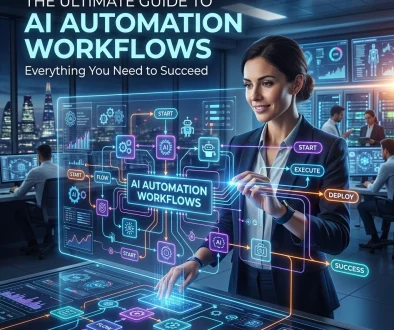
The Proven Framework to Connect Disparate Systems and Master Business Automation
System Fragmentation Status
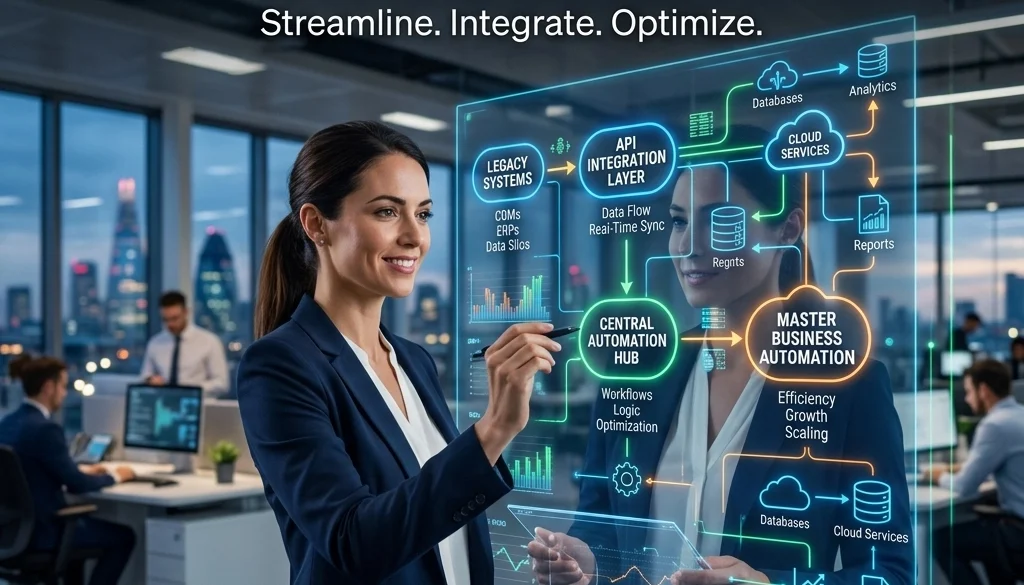
The current state of enterprise technology is characterized by fragmentation. Organizations utilize disparate software solutions for distinct functional areas. This separation results in data silos. Manual data entry is frequently required to transfer information between systems. Redundancy increases. Error rates rise. Operational efficiency decreases.
Connectivity is the prerequisite for automation. A framework for integration provides the structure necessary to synchronize data and logic across the enterprise.
Core Integration Framework Phases
Phase 1: System Audit and Inventory
The initial phase involves the identification of all active software. Every application, database, and third-party service is documented.
- Application Identification: List all SaaS, on-premise, and legacy systems.
- Data Source Mapping: Identify where primary records (Single Source of Truth) reside.
- Connectivity Evaluation: Determine the availability of APIs (REST, SOAP, GraphQL), database access, or file transfer capabilities.

Phase 2: Selection of Integration Architecture
The architecture determines the scalability of the system.
Point-to-Point Integration
Direct connections are established between two specific systems. Custom code is written for each link.
- Suitability: Small environments with 2-3 applications.
- Risk: High maintenance. "Spaghetti architecture" develops as complexity increases.
Enterprise Service Bus (ESB)
A centralized hub facilitates communication. Applications connect to the bus rather than to each other.
- Suitability: Large-scale legacy environments.
- Function: Data transformation and protocol conversion occur within the bus.
Middleware and iPaaS
Cloud-based integration platforms as a service (iPaaS) provide pre-built connectors.
- Suitability: Modern enterprise stacks.
- Benefit: Reduced deployment time. Custom software development is minimized through the use of standardized adapters.
Phase 3: Data Normalization and Transformation
Disparate systems utilize different data formats (JSON, XML, CSV). A translation layer is required.
- Schema Alignment: Mapping fields between System A and System B.
- Data Cleaning: Removal of duplicates and formatting errors during transit.
- Transformation Logic: Applying business rules (e.g., currency conversion, date formatting) to data in motion.
Implementation of AI Automation Workflows
To automate business operations with ai, simple data transfer is insufficient. Intelligent decision-making must be embedded into the integration layer.
AI Agent Orchestration
AI agents function as autonomous intermediaries. These agents monitor events in one system and execute complex sequences in others.
- Trigger: A new lead is created in the CRM.
- AI Action: The agent analyzes lead data, categorizes the prospect, and generates a personalized response.
- Outcome: The lead is moved to the appropriate sales pipeline without human intervention.
Detailed guidance on this is available in the AI agents and automations guide 2026.

Predictive Workflow Execution
Traditional automation follows "if-then" logic. AI automation workflows utilize machine learning models to predict the next required action.
- Inventory Management: AI monitors stock levels and predicts demand based on historical data, automatically generating purchase orders in the ERP.
- Customer Support: AI analyzes incoming tickets for sentiment and urgency, routing high-priority issues to senior staff while resolving low-complexity queries via self-service modules.
Technical Requirements for Connection
API Management
Application Programming Interfaces (APIs) are the primary method for system connectivity.
- Authentication: Implementation of OAuth2, API Keys, or JWT.
- Rate Limiting: Prevention of system overloads by controlling the frequency of requests.
- Error Handling: Automated retry logic for failed requests and logging for manual review.
Security Protocols
Data integrity and security are mandatory.
- Encryption: Use of TLS for data in transit and AES-256 for data at rest.
- Access Control: Role-Based Access Control (RBAC) ensures only authorized systems interact with sensitive endpoints.
- Audit Trails: Recording of every data exchange for compliance and troubleshooting.
For organizations requiring high privacy, self-hosting LLMs ensures that data remains within the private infrastructure.
Step-by-Step Deployment Guide
1. Requirements Documentation
Functional requirements define the expected outcome. Technical requirements define the constraints.
2. Prototype Development
A Minimal Viable Integration (MVI) is established. This connects the two most critical systems to validate the data flow.
3. Workflow Configuration
Logic is defined. AI automations are integrated at this stage. Logic triggers, filters, and delays are configured.
4. Testing and Validation
- Unit Testing: Testing individual connections.
- Integration Testing: Testing the end-to-end workflow.
- Load Testing: Ensuring the framework handles peak data volumes.
5. Production Launch
The framework is deployed. Monitoring tools are activated to track performance and errors.

Optimizing Business Operations via Integration
The integration of disparate systems results in measurable operational improvements.
| Metric | Pre-Integration | Post-Integration |
|---|---|---|
| Data Entry Time | High (Manual) | Zero (Automated) |
| Data Accuracy | Variable (Human Error) | High (Systemic) |
| Process Lead Time | Days/Weeks | Minutes/Hours |
| Operational Visibility | Fragmented | Unified |
To calculate the specific financial impact, refer to the AI automation ROI calculator.
Advanced Automation Considerations
Model Context Protocol (MCP)
Modern integration utilizes the Model Context Protocol to connect AI models with various data sources. This allows AI models to retrieve real-time data from disparate databases without manual export/import processes.
Edge Computing
In scenarios involving physical hardware or IoT, edge computing allows for data processing closer to the source. This reduces latency in the automated workflow.
Legacy System Bridging
For systems without APIs, Robotic Process Automation (RPA) or custom middleware wrappers are utilized. This enables custom software to interact with older terminal-based or GUI-only applications.
Governance and Maintenance
A framework is not static. Continuous management is required.
- Version Control: Tracking changes in integration scripts and configurations.
- Dependency Management: Monitoring updates in third-party APIs that may break existing connections.
- Performance Optimization: Periodic review of workflow efficiency to identify bottlenecks.
Organizations often seek external expertise to manage these complexities. Information regarding service providers is found in the offshore web and mobile apps guide or by viewing pricing for managed development.
Strategic Summary
The connection of disparate systems is a foundational requirement for modern enterprise operation. The utilization of a structured framework: comprising audit, architecture selection, normalization, and AI-driven orchestration: enables the transition from fragmented silos to a unified, automated environment.
Efforts to automate business operations with ai are successful only when the underlying data infrastructure is cohesive. Standardized ai automation workflows reduce human intervention, minimize errors, and allow for the reallocation of resources toward high-value activities.
For further information on implementation, visit Marketrun.