Do You Really Need Another SaaS Subscription? Here’s the Truth About Infrastructure Ownership
Subscription Proliferation Analysis
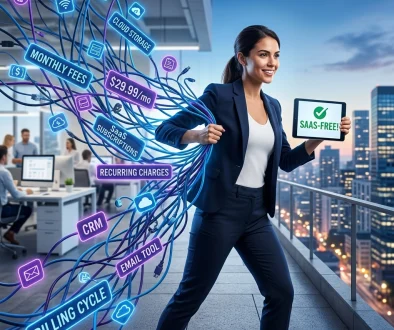
The current digital landscape is characterized by an accumulation of Software as a Service (SaaS) subscriptions. Commercial entities and individual developers frequently utilize multiple platforms for database management, workflow automation, and artificial intelligence integration. While initial entry costs are low, the long-term financial and operational implications involve significant cumulative expenditure and systemic dependency.
Systemic dependency, commonly referred to as vendor lock-in, occurs when data and logic are housed within proprietary environments. This structure restricts the mobility of digital assets. Infrastructure ownership offers a corrective path through the utilization of self-hosted open source tools.
Infrastructure Ownership vs. SaaS Rental
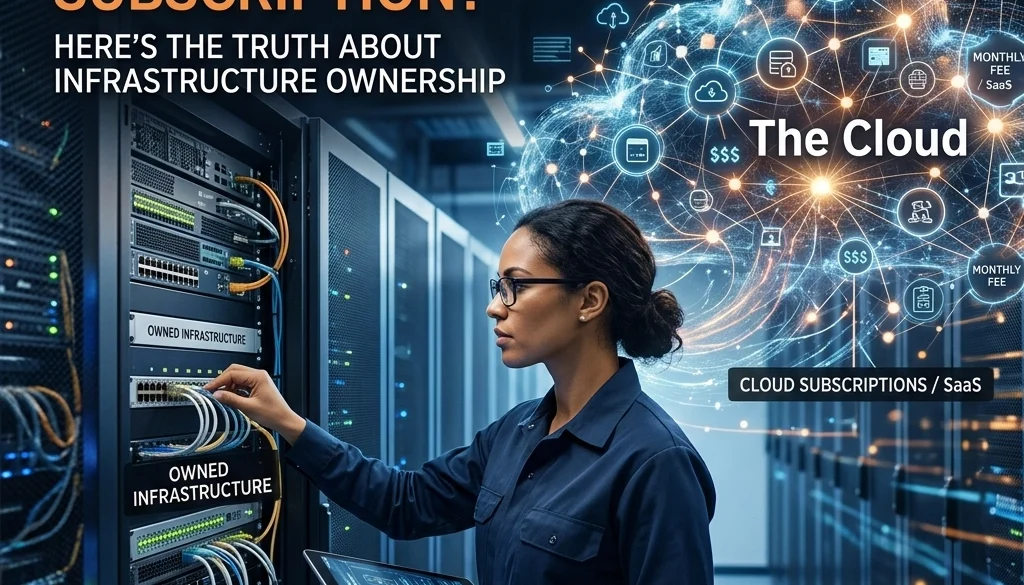
Infrastructure ownership involves the deployment of software on hardware or virtual private servers (VPS) controlled by the user. SaaS models operate on a rental basis where access to tools is contingent upon recurring payments.
Asset Control and Data Sovereignty
Ownership ensures that data remains within a localized or controlled environment. This minimizes external access points and adheres to strict data sovereignty regulations. In a rental model, the provider maintains administrative control over the underlying infrastructure.
Financial Longevity
SaaS costs scale with usage or user count. Self-hosting involves fixed costs related to server maintenance and resource allocation. Over a multi-year period, self-hosting typically results in lower total cost of ownership (TCO).
Functional Customization
Proprietary SaaS platforms offer limited customization within a predetermined framework. Open source tools allow for direct modification of source code and configuration files.
Self-Hosted Open Source Tools: Core Infrastructure Components
Specific tools facilitate the transition from subscription models to owned infrastructure. These include Supabase for database and backend requirements, n8n for workflow automation, and Ollama for large language model (LLM) execution.

Supabase: The Backend Ownership Layer
Supabase serves as an open-source alternative to proprietary backend platforms like Firebase. It provides a suite of tools including a PostgreSQL database, authentication, and edge functions.
Features of Supabase Self-Hosting
- PostgreSQL Database: A relational database system that ensures ACID compliance.
- Real-time Engine: Enables data synchronization across clients.
- Storage: S3-compatible file storage systems.
- Authentication: Identity management without external per-user fees.
Deployment is typically executed via Docker Compose. The configuration involves setting environment variables for database credentials and API keys. This setup removes the necessity for monthly tiered pricing based on active users or database rows. Detailed information on custom deployments can be found at Marketrun Custom Software.
n8n: Workflow Automation Control
Workflow automation is frequently managed through subscriptions that charge based on the number of tasks executed. n8n is an extendable workflow automation tool that can be self-hosted to remove execution limits.
Advantages of n8n Deployment Services
- Data Locality: Sensitive data processed during automations does not leave the internal network.
- Node-Based Architecture: A visual interface for connecting hundreds of services via APIs.
- Unlimited Executions: The only constraint is the hardware resource of the hosting environment.
Organizations requiring complex integration logic benefit from n8n deployment services. This approach ensures that business logic remains a private asset.
Ollama: Local AI and LLM Execution
Large Language Models are standardly accessed via API calls to centralized providers. This results in per-token costs and potential privacy risks regarding the input data. Ollama allows for the local execution of models such as Llama 3 and Mistral.
Technical Specifications for Ollama
- Hardware Requirements: Sufficient VRAM is necessary for model inference.
- API Compatibility: Provides a local endpoint that mimics standard AI service structures.
- Privacy: All inference occurs on the local machine, ensuring no data leakage to third-party model providers.
For comprehensive strategies on integrating local AI, refer to the Self-Hosting LLMs 2026 Guide.
Deployment Methodologies
Successful infrastructure ownership requires a structured deployment methodology. The process generally follows a standardized sequence of initialization, configuration, and maintenance.
1. Environment Selection
Infrastructure can be hosted on-premises or via cloud providers using a "Bring Your Own License" (BYOL) or pure open-source approach. Marketrun provides guidance for selecting optimal environments in India and the USA.
2. Containerization
The use of Docker is the standard for self-hosting. Each application resides in an isolated container, ensuring that dependencies do not conflict.
- Step A: Install Docker and Docker Compose.
- Step B: Clone the official repository of the tool (Supabase, n8n, etc.).
- Step C: Configure the
.envfile with secure secrets. - Step D: Execute
docker-compose up -d.
3. Reverse Proxy and Security
To access services externally, a reverse proxy such as Nginx or Caddy is utilized. This manages SSL certificates through Let’s Encrypt, ensuring encrypted communication.

Economic Comparison: SaaS vs. Self-Hosting
| Feature | SaaS Subscription | Self-Hosted Infrastructure |
|---|---|---|
| Initial Cost | Low / Free Tier | Server Provisioning Time |
| Scaling Cost | Exponential (Per User/Task) | Linear (Hardware Upgrades) |
| Data Control | Shared with Provider | Total Ownership |
| Vendor Lock-in | High | Low / None |
| Uptime Responsibility | Provider | User/Managed Service |
The transition to self-hosting results in a shift from Operational Expenditure (OpEx) to a more stable asset-based model. While the user assumes responsibility for uptime, automated backup systems and managed deployment services can mitigate this risk. Information regarding ROI calculations is available through AI Automation ROI.
Strategic Implementation of AI and Automations
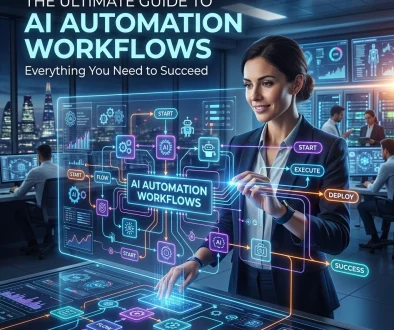
Infrastructure ownership is a prerequisite for advanced AI and automation strategies. When tools like n8n and Ollama are integrated within a private network, they create an autonomous ecosystem. This ecosystem is capable of processing internal documents and customer data without exposing the information to external LLM providers.
Workflow Integration Example
- Trigger: A new entry in the self-hosted Supabase database.
- Action: An n8n workflow retrieves the data.
- Processing: The data is sent to a local Ollama instance for summarization.
- Result: The summary is saved back to Supabase and a notification is sent via a local mail server.
This entire sequence incurs zero per-task or per-token fees. This model is explored further in the AI Agents and Automations Guide.
Maintenance and Security Protocols
Ownership entails the responsibility of system maintenance. Factual requirements for a secure self-hosted environment include:
- Regular Backups: Automated snapshots of databases and configuration volumes to external storage.
- Update Schedules: Periodic pulling of updated Docker images to patch security vulnerabilities.
- Monitoring: Implementation of tools like Prometheus or Grafana to track server health and resource usage.
- Access Control: Implementation of Virtual Private Networks (VPNs) or Zero Trust Network Access (ZTNA) to restrict access to infrastructure.
Organizations lacking internal resources for these tasks often utilize specialized deployment services to maintain system integrity.

Technical Consolidation through Marketrun
The complexity of manual deployment can be high. Marketrun facilitates the transition from SaaS dependency to infrastructure ownership. Services include the setup and management of AI automations and custom software development.
By leveraging self-hosted open source tools, businesses eliminate the financial drain of redundant subscriptions. The shift toward ownership is a move toward long-term digital stability and data autonomy.

Conclusion of Analysis
The requirement for another SaaS subscription is often a result of convenience rather than technical necessity. Infrastructure ownership, facilitated by tools such as Supabase, n8n, and Ollama, provides a viable alternative. This model supports data sovereignty, eliminates vendor lock-in, and optimizes long-term expenditure. For further technical resources on these implementations, visit Marketrun Solutions.