The Ultimate Guide to AI-Driven Engineering: Everything You Need to Succeed in the Next Decade
AI Engineering Foundation
AI-driven engineering is the integration of machine learning models into the software development lifecycle. This integration facilitates the automation of complex tasks, the generation of code, and the optimization of system architectures. Success in the next decade requires an understanding of model selection, data infrastructure, and the deployment of custom AI solutions for SMBs.
The transition from traditional software engineering to AI-driven engineering involves a shift from deterministic logic to probabilistic outputs. Models are utilized to assist in the identification of patterns within large datasets and the generation of functional code blocks.
Technical Core Components
Model Selection and Implementation
Engineering projects require the selection of appropriate Large Language Models (LLMs). Selection criteria include parameter count, latency requirements, and task specificity. Models are deployed via API or through self-hosting LLMs to maintain data privacy and reduce long-term operational costs.
AI Engineering Mindset
The AI engineering mindset prioritizes iterative refinement and prompt engineering. Processes are established to validate model outputs through automated testing and human-in-the-loop verification. This ensures that the generated assets meet technical specifications and security standards.

Strategic Phases for Implementation
Phase 1: Preparation and Use Case Identification
Identification of specific process bottlenecks is the primary step. High-value use cases often include legacy code refactoring, automated documentation, and unit test generation. Organizations focus on custom software requirements to define initial implementation boundaries.
For small and medium-sized businesses, the focus is on custom AI solutions for SMBs that provide immediate efficiency gains. This involves the assessment of existing workflows to determine where AI intervention is feasible.
Phase 2: Application and Infrastructure Development
Infrastructure must support the continuous flow of data to and from AI models. This includes the establishment of vector databases for retrieval-augmented generation (RAG) and the implementation of robust CI/CD pipelines.

AI Agents for Business Integration
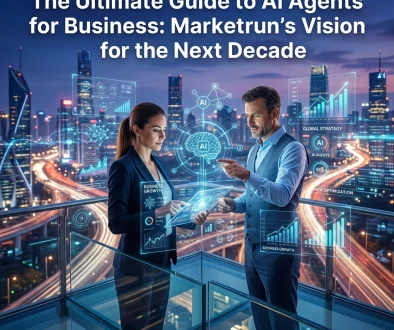
The deployment of AI agents for business allows for the automation of multi-step workflows. These agents operate autonomously to perform tasks such as system monitoring, ticket resolution, and data synchronization across disparate platforms. Detailed methodologies for agent deployment are documented in the AI agents and automations guide 2026.
Phase 3: Measurement and ROI Analysis
Measurement focuses on objective performance indicators. Metrics include:
- Lead time for changes
- Mean time to recovery (MTTR)
- Code review cycle time
- Resource utilization rates
Vanity metrics such as "total lines of code generated" are discarded in favor of AI automation ROI calculations.
Domain-Specific Applications
Software Development Lifecycle (SDLC)
AI tools are integrated into IDEs to provide real-time suggestions. This reduces developer toil and allows for the focus on high-level architecture. Marketrun provides mobile and web app solutions that leverage these AI-driven workflows to accelerate delivery timelines.
Hardware and Design Engineering
AI facilitates the verification of part numbers, wall thickness validation, and historical data reviews. This prevents late-stage errors and reduces rework costs. AI-informed comments are generated based on historical review data to guide design improvements.

Organizational Strategy and Leadership
Leadership Oversight
Engineering leadership transitions from task management to strategic oversight. This involves the coordination of AI tools across distributed teams and the assurance of quality standards. Marketrun offers solutions for US clients and India clients to manage offshore development with high visibility and control.
Workflow Automation
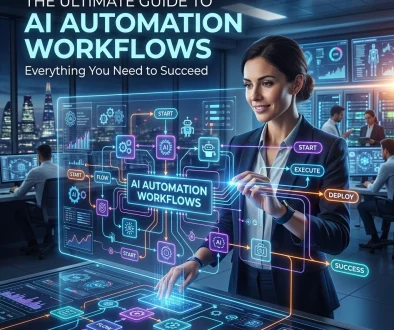
The reduction of developer toil is achieved through the automation of administrative tasks. Integration with platforms such as GitHub, Jira, and GitLab is required to maintain workflow continuity without context switching.
Custom AI Solutions for SMBs
Small and medium-sized businesses utilize AI to achieve parity with larger enterprises.
Scalability and Cost Efficiency
Custom solutions allow for the scaling of operations without a linear increase in headcount. The use of open source deployment strategies reduces licensing fees and provides greater control over the technology stack. Comparison of costs between regions is essential for budget optimization, as detailed in the custom software India vs USA cost guide.
Specialized Tools
- AI Website Creation: Rapid deployment of SEO-optimized digital assets. AI website creation and AI website SEO strategies are employed to increase market visibility.
- Windows Software: Specific Windows software solutions are developed to integrate AI capabilities into legacy desktop environments.
Future Outlook (2026-2036)
The next decade will be characterized by the proliferation of autonomous engineering systems. These systems will not only assist in coding but will also manage infrastructure, security, and performance optimization autonomously.

Marketrun’s Vision
The objective of Marketrun is the democratization of high-end AI engineering. By providing custom AI solutions for SMBs and advanced AI agents for business, Marketrun enables organizations to adapt to the evolving technological landscape.
Implementation Checklist for Engineering Teams
- Baseline Assessment: Define current productivity metrics.
- Infrastructure Readiness: Evaluate data quality and accessibility.
- Pilot Program: Implement AI in a non-critical workflow.
- Security Audit: Ensure model compliance and data protection.
- Scaling: Deploy AI tools across all engineering departments.
Status Summary
| Category | Status | Action Required |
|---|---|---|
| Core AI Concepts | Defined | Internal Training |
| Infrastructure | Evolving | Deployment of Vector DBs |
| AI Agents | Operational | Integration with CRM/ERP |
| ROI Tracking | Established | Monthly Audit |
Technical documentation and further insights are available through the Marketrun Blog. Detailed pricing structures for AI implementation can be reviewed at Marketrun Pricing.
Technical Conclusion
The integration of AI into engineering processes is a functional requirement for organizational longevity. Success is dependent upon the systematic application of models, the measurement of objective outcomes, and the continuous evolution of data infrastructure. Custom software development now necessitates an AI-first approach to remain competitive in global markets.